

PROTECT YOURSELF with Orgo-Life® QUANTUM TECHNOLOGY
Orgo-Life the new way to the future Advertising by AdpathwayWe may receive a portion of sales if you purchase a product through a link in this article.
Remember your glitter-eyeliner phase? Your matte-everything phase? We’ve all had our fair share of makeup eras, but somewhere around 40, most of us hit a phase nobody warned us about: figuring out how to look like ourselves again—not younger, not older, just you, on your best day. Between hormonal shifts, environmental factors, and dipping collagen and elastin, our skin changes as we age, so it makes sense that our routines should change, too. Though many of us have gone through plenty of makeup chapters, from trying on trends to figuring out how to look our personal best, there’s surprisingly little guidance out there on makeup for women over 40. So we asked Bobbi Brown, renowned makeup artist and founder of Jones Road Beauty, how to approach makeup for mature skin.
Feature image by Michelle Nash from Wake Up Call with Odette Annable
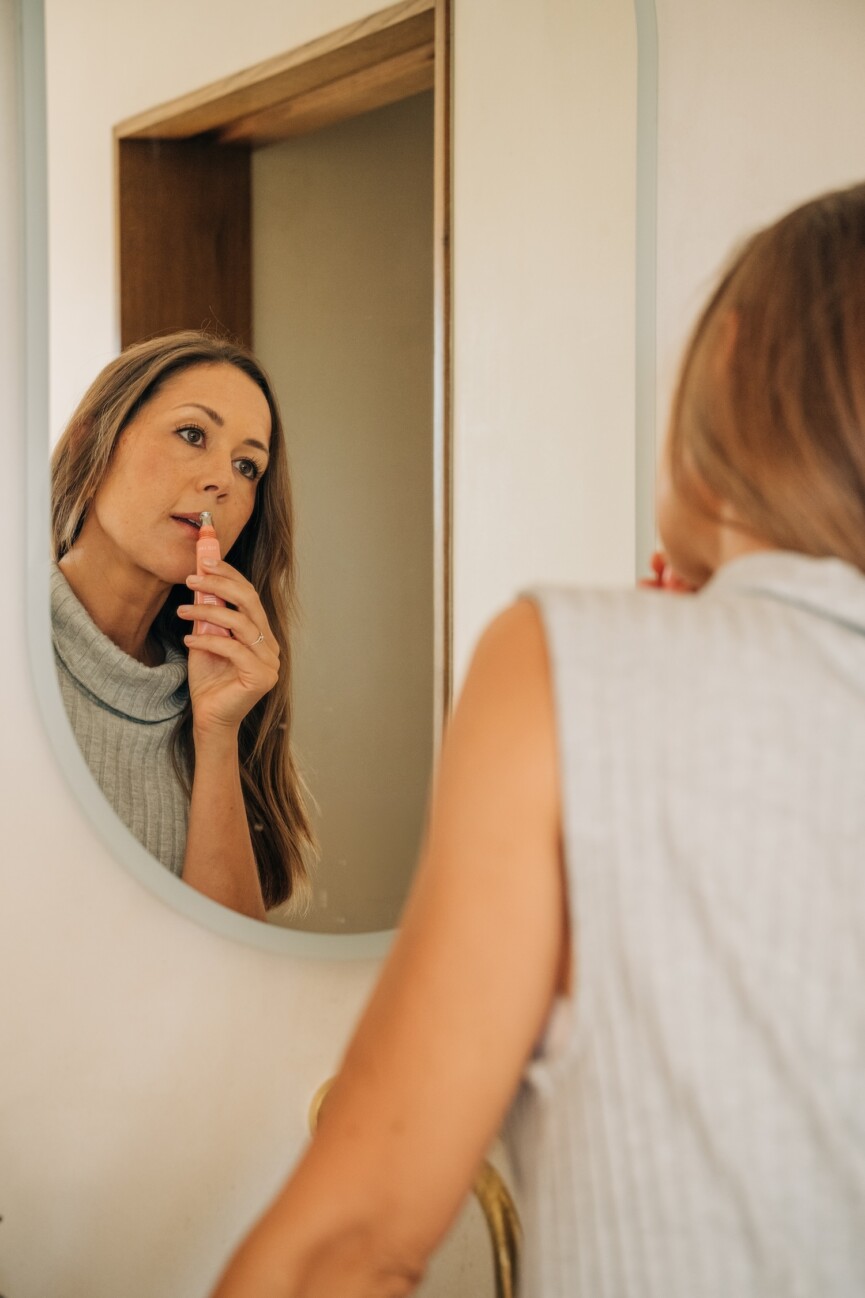

Makeup for Women Over 40: The Basics, According to Bobbi Brown
For many women, 40 feels like a new beginning. But inner confidence doesn’t always align with outer confidence—especially when most beauty messaging is still about looking younger.
Brown offers a reframe: “The goal is not to look younger. It’s to look like yourself on your very best day: fresh, healthy and well-rested.”
And for many women that sit in Bobbi Brown’s makeup chair, that actually means wearing less makeup as they get older, not more. “Wear less than you think you need,” says Brown. Less makeup leaves room for more you, she tells us. “I’m wearing less makeup than I ever have, and so are our customers. We all have character lines, and that’s okay. Show off your freckles and your strong nose, because that’s what makes you uniquely who you are.”
So if less is more, how do we make the most of our signature makeup routine? And what products should we use—and which ones to skip?
Don’t Skip Skin Prep
For women over 40, Brown advises, makeup starts before you even pick up a brush. Skin prep is more important than ever for skin after 40. “It’s inevitable that as we get older, our skin gets drier and you may find your skin just looks less vibrant. The good news is that dryness and dullness are easy to fix,” says Brown. “Mature skin wants hydration, lighter textures, and a little glow.”
“Makeup is only as good as the skin underneath it.”
Experts agree: The priorities of mature skin are hydration and cell turnover. Retinol is the gold standard for cell turnover but it only adds to the skin’s dryness. That means hydrate, hydrate, hydrate.
“Don’t be afraid to add more hydration,” says Brown. “If you have a dry patch, tap on a little more cream.”
Look for rich moisturizers with ingredients packed with ceramides, glycerin, hyaluronic acid, peptides, and natural oils and butters.
Coverage for Mature Skin: Less Is More
When it comes to coverage, it might be tempting to reach for more. But this is where Brown’s “less is more” advice comes in. It’s not about how much product you use, but the quality of the product itself.
“Look for creams over powders and sheer formulas over heavier ones,” says Brown. “You want formulas that move with your skin instead of sitting on top of it.” Spot-concealing with lightweight, hydrating products makes for a more flexible finish than a heavy, full-coverage base. “The goal is to look like your skin on its best day, not like you’re wearing a mask.”
Just as important as texture? Shade-matching is easily underrated. How many of us haven’t switched up our shades in years? Even when I try a new foundation, I use my tried-and-true foundation shade as a reference. But a recent consultation with a makeup artist revealed I’ve been wearing the wrong shade for years! Brown says that’s more common that you might think. Most people test their shades in the harsh store lighting, but they key is actually natural light.
“The best way to test a foundation: Swatch it on your cheek in natural daylight. If the shade disappears, you’re wearing the right shade.” Brown also says apply your makeup in natural light, too. Goodbye, harsh lighting.
Concealing for Mature Skin
“[Concealing] is the step that makes the biggest difference,” says Brown. You might want to skip base coverage all together, and a good concealer helps with that.
Like your base, your concealer works best when it’s lightweight, flexible, and hydrating. The only difference is that it should be one shade lighter than your foundation color. Make sure to use an eye cream under your concealer for smooth application.
To take it one step further, says Bobbi, add a neutralizer. “For dark circles [and other dark spots and hyperpigmentation], use a neutralizer first, and choose it by the color of your circles, not your skin tone. Then, layer your concealer over top of the neutralizer.”
Other than light concealer, Brown doesn’t recommend overdoing it. “Use powder only where you get shiny, if at all. Don’t contour, just enhance your own features.” Just pat your concealer into your skin, and go.
Eyes & Brows
The eyes are the windows to the soul. They’re also where we start to see the most changes as we get older. Skin prep around the eyes—from eye creams to eye patches—is important, but Brown says not to forget about the brows, either.
“Brows frame your face, and they tend to thin as we get older, so fill them in softly,” she says. Use soft, natural strokes with a brow pencil, then set with a brow gel.
For eyeshadow, brown recommends natural shades. She recommends neutral shades like browns, taupes, and smoky grays. “They work on everyone and never look dated.” As with face coverage, choose a cream formula over a powder, one that doesn’t settle into lines, that you can just swipe it on and blend with your finger.
Finish With Some Color
Most of us have heard that lip and cheek color is about adding that sense of youthfulness back into the face. But that natural flush is about more than that. Think of how you look after a satisfying workout, or night of laughter, or a day at the beach. Adding some color to your routine reflects how you feel on your best days.
Brown agrees, saying: “No matter your age, everyone looks better with a little color in their cheeks.” Again, a lighter cream blush—especially a multitasking balm you can use on your lips and cheeks and even the bridge of your nose—settles into the skin without creasing. Choose a hydrating formula that you can build according to your mood.
For lips, the same formula applies: hydration, plus buildable color. Prioritize hydration. Start with a sleeping mask at night, then add a lip butter or balm before applying your color. Brown’s tip: “[Add] a lip pencil keeps color from bleeding.”



















 English (US) ·
  French (CA) ·
  French (FR) ·