

.png) 2 months ago
56
2 months ago
56
PROTECT YOURSELF with Orgo-Life® QUANTUM TECHNOLOGY
Orgo-Life the new way to the future Advertising by AdpathwayThe deadly H5 bird flu that has devastated wildlife populations globally since 2021 is spreading across Australia.
The federal government announced the first vaccination plans for captive native bird species last week and the Victorian government has moved to vaccinate wild little penguins after the first detections in terns on Phillip Island. On Saturday, the state government announced the death of a little penguin on the island, the first confirmed case of H5 bird flu in the species.
But for those who don’t live in communities in southern Australia on the frontline of the highly pathogenic virus, the possibility that they will at some point see the severe consequences of H5 bird flu for native birds might not have registered.
There is a level of uncertainty about how native species will be affected as they are exposed to the deadly strain for the first time.
Here are the birds experts are most concerned about – including some of Australia’s most common and loved species.
Silver gull (seagull)
The silver gull – or seagull – is in the “high risk” category of a government assessment of the potential effects of H5 bird flu on every Australian bird and mammal species.
High risk means where infections occur, the species faces potentially severe drops in population sizes or viability.
When the first cases in seagulls were detected in South Australia in late July, it was viewed by experts as a new front for the spread of the virus.
This is because gulls are highly mobile and found in high numbers all over the country, including wetlands, inland and cities. They gather in flocks and are scavengers – two things known to increase transmission.
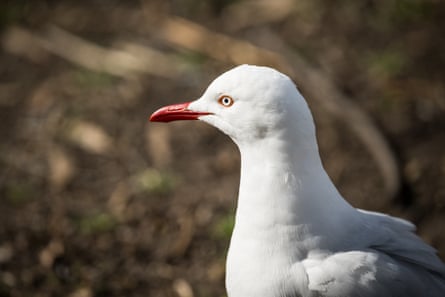
They are also a bird that many Australians interact with regularly.
“I really am concerned about them being one species where we will see large or mass mortality because they are scavengers and they’re also very close to our big cities,” says Prof Richard Kingsford, director of the Centre for Ecosystem Science at the University of NSW.
“I think seagulls will be the species that will most likely make the impact of bird flu hit home for the public.”
White-bellied sea eagle
In the United States, hundreds of bald eagles have died from H5 bird flu, with severe effects on breeding populations in some areas.
In Australia, the white-bellied sea eagle fills a “similar niche”, says Chris Purnell, BirdLife Australia’s wetland bird and migratory shorebird program manager.
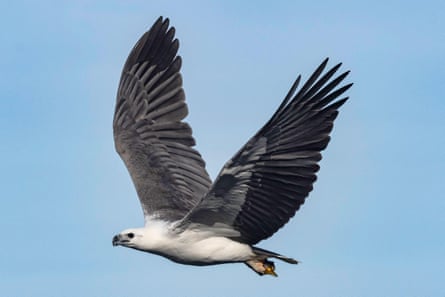
Like the bald eagle, white-bellied sea eagles are quite common. Their range extends from southern Australia up to south-east Asia.
In some parts of the country, such as Victoria and South Australia, local populations of white-bellied sea eagles are already in decline.
Purnell says the white-bellied sea eagle’s feeding behaviours – including eating potentially infected birds – could expose it to the virus.
“It mostly takes fish but will also regularly take waterfowl, which has been a major factor in bald eagle deaths overseas,” Purnell says.
Australian fairy tern
The first signs that H5 bird flu was spreading among local birds came when dead or unwell greater crested terns – a common Australian seabird – began appearing on beaches in South Australia.
The first mass mortalities from bird flu in Australia have been among greater crested terns in SA and Victoria. Tern species globally have suffered large losses from the virus.
BirdLife Australia holds particular concern for another tern species – the Australian fairy tern – which is listed as vulnerable under national nature laws because it has already experienced declines.
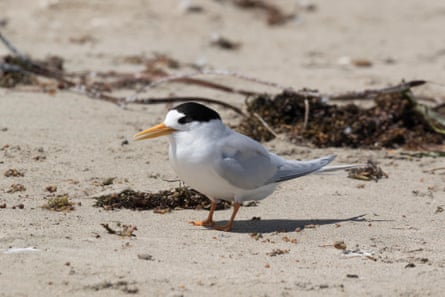
One of Australia’s smallest seabirds, the fairy tern can share habitat with greater crested terns and even have neighbouring colonies. But there are fewer fairy terns and a higher proportion of the population congregates across fewer sites for breeding.
This means the risk H5 poses to fairy terns is greater, with the possibility not only for deaths of birds but longer-term breeding impacts.
In the government risk assessment, Australian fairy terns were rated “very high”, signalling potential for very severe population reductions.
Purnell points to Victoria, where “our whole population of fairy terns descended on one breeding site last year”.
“You’ve got a whole regional population which could accumulate in one site,” Purnell says.
“If a gull flew in, dropped the virus in there and then flew off, then that could potentially impact the whole breeding population within that site.”
Australian pelican
Kingsford says the first sign H5 bird flu has affected Australia’s waterbirds could come through the country’s beloved pelicans.
Waterbirds are highly susceptible to bird flu because they gather in large numbers for breeding and feeding. They also move vast distances between inland and coastal Australia.
Flocks of sometimes tens of thousands of pelicans will breed in rookeries in inland Australia when conditions are right.
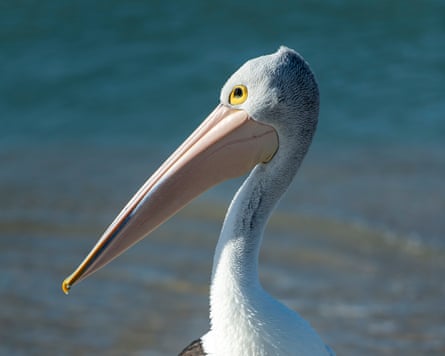
“If it gets into these big breeding rookeries of pelicans, it will be devastating,” Kingsford says.
There’s also potential for pelicans to be affected in a wide range of places from the coast to the bush.
“Everyone loves pelicans, so this will be really upsetting for the general public.”
Black swan
Australia’s famous black swans are considered highly susceptible to H5 bird flu because they lack some of the immune genes that have helped other waterbirds combat the virus.
They can breed in isolated pairs or in rookeries. Like pelicans, they can gather in large flocks and travel vast distances, increasing the possibilities for spread of the virus.
Genomic research published in 2023 found black swans lacked the necessary components to detect H5N1. They also had a heightened inflammatory response when cells were infected.
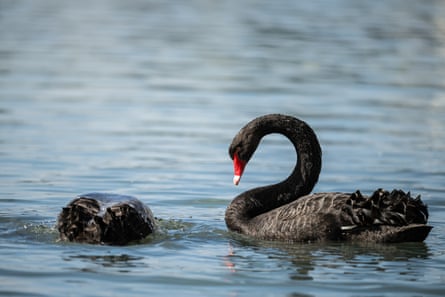
This means if they become infected, they could suffer widespread deaths, says the University of Queensland’s Prof Kirsty Short, who led the research.
“You can think of black swans as a sentinel species. If there’s H5N1 in the area, black swans are likely to succumb to the infection,” she says.
“They’re such an iconic species that it’s going to be noticed.”
Brolga
The brolga is one of Australia’s two native crane species and has deep cultural significance for Indigenous communities.
A gregarious bird, famous for its courtship dance, the brolga is widespread across parts of northern and eastern Australia. But in Victoria it has been reduced to an isolated population of about 600 to 700 birds.
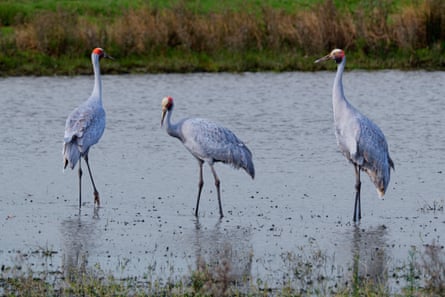
Internationally, thousands of birds in the crane family have died from H5 bird flu.
During winter, brolgas can flock together in groups of hundreds of birds.
Purnell says if one or two birds were to become infected during that time, “it could spread like wildfire”.
“They’re a highly visible bird and known in rural communities. If they’re lost from the landscape, it will be felt within these communities.”



















 English (US) ·
  French (CA) ·
  French (FR) ·