

 2 months ago
76
2 months ago
76
PROTECT YOURSELF with Orgo-Life® QUANTUM TECHNOLOGY
Orgo-Life the new way to the future Advertising by Adpathway5 min readPuneJul 19, 2026 03:24 PM IST
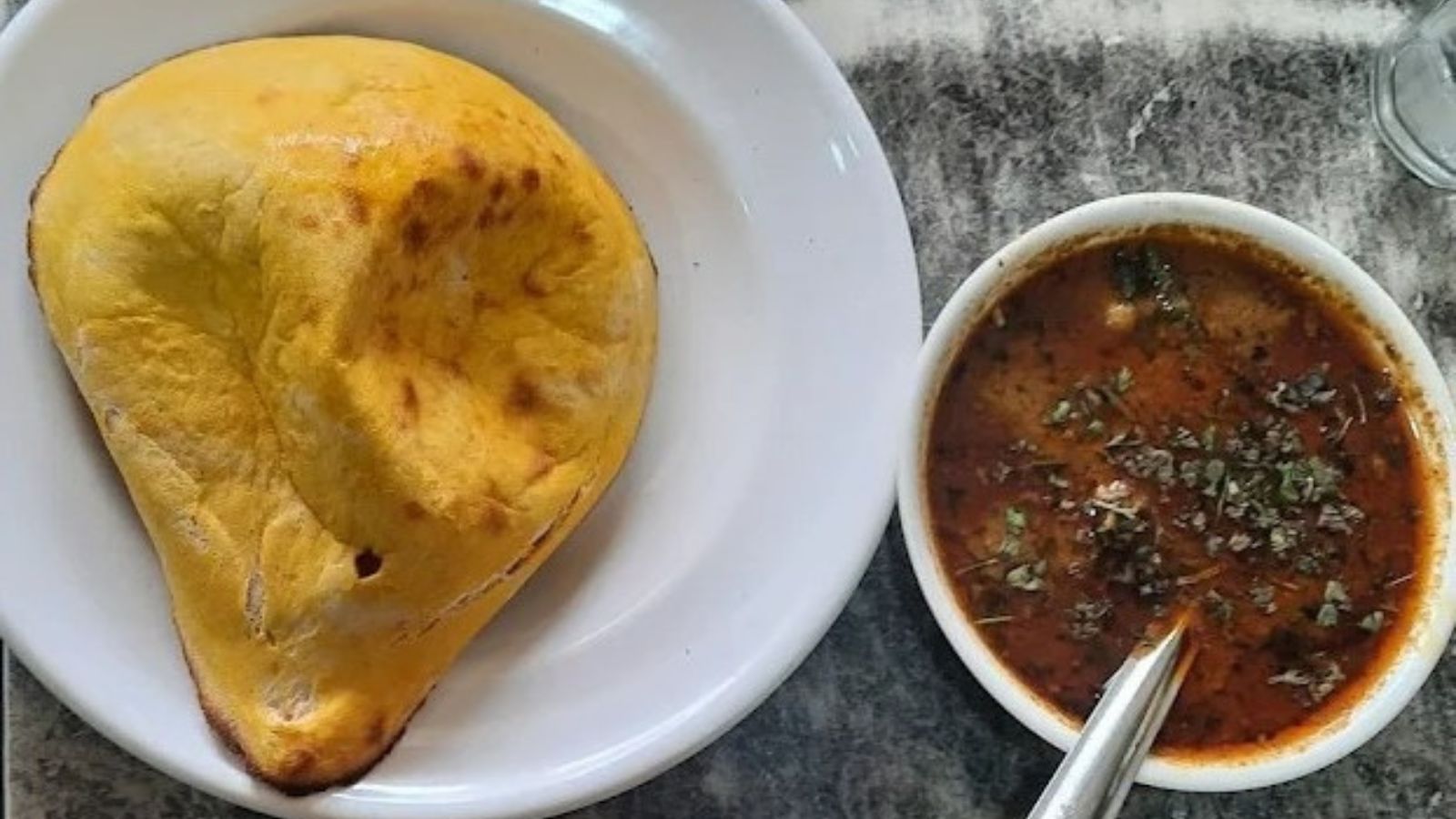 Naan Khaliya – a soft, golden naan served with a bowl of soupy mutton curry. (Express Photo)
In the old bylanes of Chhatrapati Sambhajinagar (formerly Aurangabad), pots of mutton cooking in a rich, spiced gravy have been drawing crowds for generations. Locals call the preparation Khaliya, also known as Qalia – soupy, slow-cooked meat curry so tender that it is often described as melting in the mouth. The curry is paired with soft, wood-fired naan – creating the mouth-watering Naan Khaliya dish. However, what few know is that this comfort food has a royal, military origin story.
A dish born to feed an army
According to Shoeb Khan, second-generation owner of Abdul Jabbar Khaliya House in Chhatrapati Sambhajinagar, Naan Khaliya traces back to the 14th century, when the royal chefs of Sultan Muhammad bin Tughlaq created it. The Sultan is remembered in history for his decision to shift the capital from Delhi to Daulatabad, and moving his enormous army meant solving an urgent problem – how do you feed thousands of soldiers, day after day, on the move?
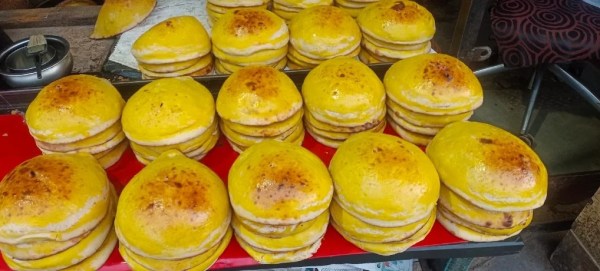 Freshly baked naans stacked at Shahed Parvana Naan Centre, Chhatrapati Sambhajinagar. (Express Photo)
Manish Gajbhiye, a resident of Chhatrapati Sambhajinagar, says, “The dish is also referred to as ‘siphaaiyon ka khana,’ or soldiers’ food. Feeding an army of that scale was no small task, and royal cooks responded by inventing something nutritious, filling, and easy to scale up for thousands at once. Centuries later, the recipe has outlived the empire that created it, evolving from battlefield rations into a dish reserved today for weddings and festive occasions.”
What is Khaliya?
At its core, Khaliya is a soupy mutton or chicken gravy, though Khan points out that it was originally made only with mutton – the chicken version was added later, on customer demand.
The preparation is elaborate. “The meat is slow-cooked in a traditional deep-bottomed vessel called a degh, along with oil, onions, ginger-garlic paste, green chillies, dry coconut, khus khus, chironji, garam masala, yoghurt, and a mix of whole spices. Mutton takes considerably longer to cook, around three to three-and-a-half hours, compared to roughly two hours for chicken, since mutton needs the extra time to reach its signature fall-apart tenderness,” Khan explains.
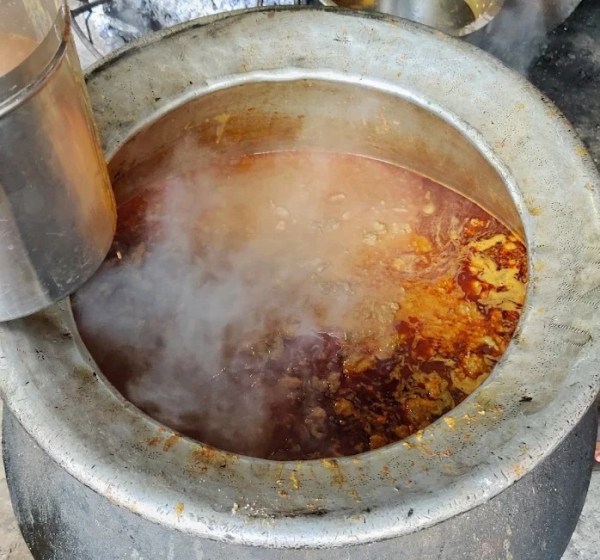 Khaliya cooks slowly in a traditional degh at Abdul Jabbar Khaliya House in Chhatrapati Sambhajinagar. (Express Photo)
Gajbhiye adds that “the meat is freshly sourced, and it is this combination of fresh ingredients and unhurried cooking that gives the dish its texture and taste, a well-rounded blend of savoury spices, a generous, distinctly spicy layer of oil floating on top, and a subtle tang that cuts through the richness.”
The naan
The dish doesn’t get its name from the curry alone – the naan that accompanies it is just as painstaking to make.
Story continues below this ad
“The dough is prepared from a mix of wheat flour, rava, and maida, combined with salt and yeast, and left to ferment for over three hours. Once ready, the naans are baked in underground tandoors and brushed with a kalonji and turmeric water wash. This step keeps the naan soft and fresh for longer, extends its shelf life, and gives it a golden-brown finish,” Khan says.
As Khan explains, the entire kitchen at his establishment, including the tandoors, runs on wood fire. It is a slower, more labour-intensive process, he admits, but it is precisely this method that lends the food its distinctive richness – a flavour a modern gas-fired kitchen cannot quite replicate.
Battlefield rations to festive centrepiece
What began as practical, mass-produced army food has today become a dish people specifically travel for. Gajbhiye says, “Naan Khaliya is the pride of Aurangabad, and despite its military origins, it now holds pride of place at weddings and festivals across the region. It is also a fairly heavy meal served in ceramic utensils and is also eaten for breakfast in the city.”
“Naan Khaliya’s fame is no longer confined to Marathwada. With food bloggers and home cooks sharing it widely on YouTube and Instagram, the dish is steadily gaining popularity across Maharashtra and the country,” Gajbhiye says. However, he offers a word of caution for those hoping to try it based on a reel alone: “the authentic experience still belongs to Aurangabad, where the recipe, the wood-fired tandoors, and the technique have barely changed in generations.”















 English (US) ·
  French (CA) ·
  French (FR) ·