

 10 hours ago
3
PROTECT YOURSELF with Orgo-Life® QUANTUM TECHNOLOGY
Orgo-Life the new way to the future Advertising by Adpathway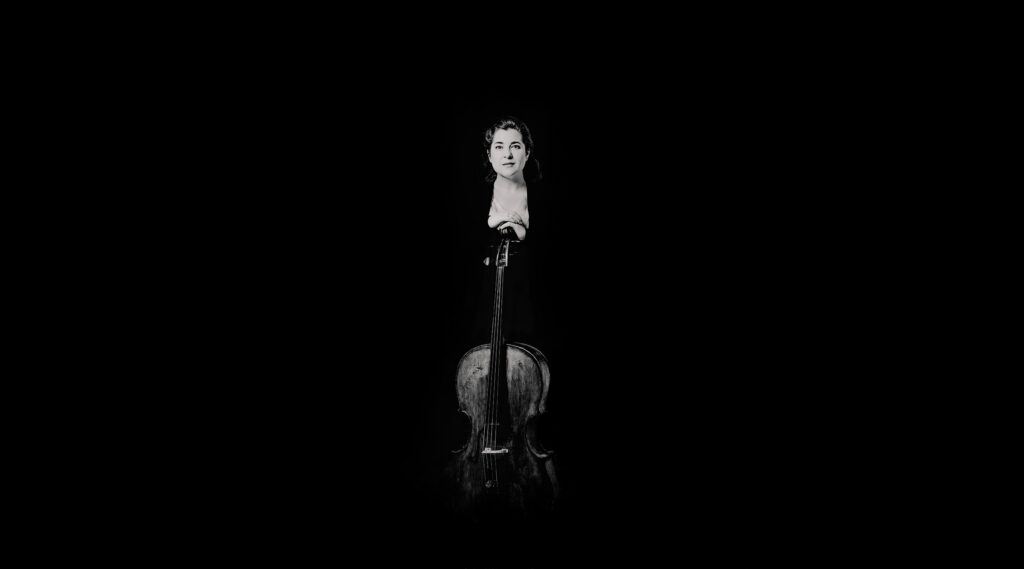
Photograph by Marco Borggreve. Courtesy of Alisa Weilerstein.
It didn’t eat, didn’t drink, didn’t sleep. It certainly didn’t cough and sneeze during performances. It made no demands. Quiescently it languished in its carbon-fiber carrying case, helpless, hidden, and naked as the day it was born. Braced within velvet and Velcro, suspended in a cradle like a baby all unknowing, the cello was propelled up and down escalators and into elevators, cars, buses, bars, cafés, restaurants, and restrooms, through crowds of people completely oblivious to the thing of beauty in their midst. It had its own transit papers, its own seat on the plane, and was accompanied on every jaunt by four loosened bows and various spare strings of gut or steel. In one side pocket lay a tiny forest green canister of peg dope; in the other, a disc of rosin with a well-worn central groove nestled in a square of brown felt.
Shunted this way and that, pushed, pulled, humped, bumped, and sometimes accidentally thumped, the cello made no complaint. When allowed out of its case, it was cosseted, tuned, and gently dusted to remove rosin buildup. It was regularly dropped off at a renowned luthier’s for checkups and fiddly repairs: crack reduction, peg tightening, polishing, and adjustment of the sound post. And on planes and trains, in the car, in hotel rooms, dressing rooms, practice rooms, airport lounges, auditoriums, even the White House, the cello was granted, whenever possible, its preferred temperature and humidity.
But, suspended in its vaguely cello-shaped cocoon, it was always waiting, poised for action: a thing so taut, so full of life as to be roused by every touch, every jolt. It hummed to itself therapeutically in the gloom, unheard. Its patience and docility were but a pose, and arrival at any concert hall was liberation. The cello burst from its bonds spruced, glittering, and robust, and roamed energetically through concerti, sonatas, trios, and quartets. It could tackle anything: Beethoven, Brahms, Schoenberg, Elgar, Dvořák. It wasn’t shy. It chimed in with any member of the orchestra, even the seemingly alien, like piccolos and timpani. Who needed them, though, when the cello produced high notes and percussive effects aplenty? It could saw, rattle, whine, trill, and blast to beat the band. Sometimes in its excitement it regressed to being a blank plank of wood, a blighted log, walloped by the back of the bow.
The cello resonated most with other string instruments. It had tried it on once with a violin, but the physical discrepancies proved insurmountable. Something could be improvised with a viola perhaps, not a violin. Just too dinky. But when it got near another cello, they would neck. Their scrolls would knock together and their pegs become so entwined, they no longer knew whose were whose. Their hips began to sway and, as their strings brushed against one another, the celli emitted convulsive, staccato sounds from their depths. They kept their tailpins withdrawn, of course, throughout.
Yet by midnight the cello was usually back inside its case, bestilled and staring either blankly ahead or checking for chinks of light that might indicate a loose buckle along the outside edge. Whenever, by chance, the case was left open, and everyone abed, there was nothing to stop the cello leaping out the window and doing superhero things. This cello could fly. It could really go! It startled pigeons in air pockets, but when the wind strummed its strings, the pigeons purred back, mollified and curious. Many a night was spent migrating with birds, butterflies, buffalo, eels, or salmon. Geese readily flew in a V formation behind the cello, trusting its sense of direction over their own. It could honk at them, if pressed.
The cello made itself useful during these nocturnal escapades, releasing livestock from trucks bound for slaughterhouses, chickens from factory farms, fish from fish farms, claustrophobic beluga whales from aquarium tanks, and cataleptic rhinos and elephants from zoos. Winging it with species-appropriate lullabies to calm their fears, the cello stuck its neck out to nudge deer, wild ponies, cougars, wolves, raccoons, prairie dogs, and prairie hens toward safer routes around, over, or under highways, making use of wildlife bridges and tunnels. (In exchange, it might steal a few choice hairs from the horses’ tails to use on a tattered bow someday.) Practicing pizzicato out at sea, relishing the sound of the ocean gusts whistling through its f-holes, it plucked flying fish from the jaws of sharks. But, born of wood, the cello felt most at home among trees. It sought out forests and jungles, the few that remained, where it swung from vines like Tarzan and delivered food to orphaned squirrel and fox kits.
Being man-made, the cello naturally felt some allegiance to the human race too. It attended the odd four-alarm fire here, or carjacking there. It helped battered women escape abusive partners. It stood bravely between muggers and their marks, but avoided gun battles, as puncture wounds might have affected its tone. The cello nimbly interceded in rapes, too, turning its scroll into a battering ram against assailants, or poking them with its spike—never enough to pierce the flesh, but sufficient to elicit a loud “OUCH!” from the stunned miscreant.
The spike could also be inserted into the spokes of speeding e-bikes; or wielded as an ice axe when the cello, unfazed by the windchill factor, was scooping people out of glacial mudslides and avalanches and carrying the maimed strapped to its shoulders, as it slithered downhill on its curvy hip. It could helicopter victims to safety too—it resembled a helicopter, after all, when seen from below. And water rescues came easy. A cello is born to float.
Wounds, it treated. Tears, it wiped. The blind, it led across the street—they never realized they’d been escorted by a cello. It took over the milk rounds of weary milkmen and brought toilet paper to people stuck on the john without any. It completed equations that had baffled mathematicians for three thousand years. Using a force field of sound waves to protect its delicate points and planes from harm, it placed itself between colliding trains and elevated sinking ferries, saving many a life. It learnt to yank tornadoes away from built-up areas, and flew into the eyes of storms, placating them with music. One night it even managed to close down every airport, permanently, to reduce global warming, coral-reef bleaching, and the inanities of mass tourism. It dragged nuclear waste deposits into outer space and dumped them into black holes, hoping for the best. It did the same with military drones, war being anathema to a cello.
In spare moments, it skipped over to Carnegie Hall, where it hung from the chandeliers and twirled on its spike onstage, jewelry-box ballerina style, before zooming back up into the stratosphere. “It’s a bird, it’s a plane!” people cried. No, just a cello on a moonlit flit.
Through these experiences—scenic, sordid, earthly, and galactic—the cello came to know of things, all things. It had much to ponder as it squeezed back into its case by dawn, just in time to resume its heavy concert and recording schedule. Music provided all the thrills of self-expression, yet the cello increasingly pined for the solo repertoire: it needed no accompaniment and wanted to be heard alone. When confronted by Kodály’s solo cello sonata, it plunged in headlong, at the risk of life, limb, and dignity. And there was Bach: enmeshed in the solo preludes, gigues, and sarabandes, the cello’s slight frame magically expanded. There was singing, much singing, mellifluous song. Through Bach the cello told of Amazonian valleys, redwoods, and Tyrolean mountains covered with flowers; of milk, fogs, mystery, the clatter of plates, lapis lazuli; of Michelangelo and Rabelais; of damselfish darting, of mosquitoes buzzing, crickets clicking, fireflies blinking. Cascades, cataclysms, red moons, eclipses. The vibrato wails of women in labor. Earth and unearthly stirrings. A snatch of folk music. Lightsome triplets, a tapping foot. Marching, too, and moping, and unpretty mud, grunge, growls, barks, roars. Dissonance, despair, desire, bliss. Electric zings and zaps. Long, low scrapes from the frog of the bow along the C string, gruff and plaintive. Flickering lights on the A string. Riots of color on the G and D, becoming a real riot, an uprising. Whipped to a frenzy, the cello produced its own harmonics, its own inventions. They rose from the warmed wood, whirled around within its core, tripped gaily along the fingerboard, leapt off the bridge, and reached all corners of the room, the hall, the rooftop, the garden, or the beach.
There is quiet too in Bach, and tragedy. It is a tragic situation, after all, for a piece of wood to have to plead with us for decency, love, and justice. It was the cello’s purest act of superheroism, to play Bach’s solo suites to a civilization sunk into depravity. It railed against the apocalyptic urge in us, our propensity for unforgiveable acts. It raised instead the idea of communion—with nature and each other—and the continuity of past and future, connections now so lazily discounted. A modest, curvy, hollow wooden box, burnished and mellowed over time, stuck together with ancient glue, adorned with two elegant serpentine holes and four ornate pegs, and stirred by the friction of horsehair rubbed back and forth across its belly, poured shame upon us all.
The land and the forests are burning! Like grumpy gods, we have set them all alight and caused great floods. We have poisoned the earth and now live merely to drive cars, employ plastic, build data centers, share viruses, amass debt, commit genocide, and watch crime dramas. Potatoes bake in the ground before they can be dug! We can’t even save sifaka lemurs, dugongs, numbats, and monarch butterflies—or our own children, riddled with unexpected cancers. We’ve made the place unfit for cats, even bugs.
The good news is that, after we’ve all disappeared, exterminated by our nukes, lab leaks, and homicidal robots, there will still be tropical sunsets and peachy mackerel clouds, though no one left to see them. Westerly winds will shift eastward, and so forth. Hurricanes will form in the Atlantic, typhoons in the Pacific, rain on the plain in Spain. Handkerchief trees will drop their hankies every autumn; Kazak pear trees will blossom into popcorn every spring. Streams will gurgle, waterfalls hurtle, unseen. Wide pancake mushrooms will reign for a week or two, here and there, before collapsing. You hope so anyway. And hyacinth macaws? With any luck, there may still be hyacinth macaws, the last on earth to speak.
The moon will wax and wane and go gibbous, to the entertainment and mystification of nobody. The sun will rise and sink, unremarked and unloved—after all it did for us! Saturn will remain the best looking of our planets, Venus a disappointment. Mars, shouldering its two moons, will sit adrift, sulky, barren, and red. And one comet will continue to pass our solar system every 160,000 years, regular as clockwork.
No one will be left to mourn the burnt libraries, the blanched Mona Lisa, the tattered Giottos, Giorgiones, Rembrandts, and Bonnards, Calder’s mobiles, the Bayeux Tapestry, Burkina Faso textiles, Kuba cloths, Shaker quilts, Persian carpets, Roman mosaics, the pyramids, Machu Picchu, and Neolithic stone circles. Nor the reduction to dust of every last copy of Jane Austen and Shakespeare, the obliteration for all eternity of King Lear, Miss Bates, Micawber, Emma Bovary, Leopold Bloom, Holden Caulfield, Casablanca, the Marx Brothers, Simone Signoret, Ella Fitzgerald, Billie Holiday, Verdi, Puccini, Scarlatti, Schubert, and Bach. It’s perhaps hardest to believe that Bach could ever disappear: he seems so essential to the universe. But he will, he will—thanks to our catastrophic failure to rebel.
We must make music! Walk, swim, fuck, make jam, drink wine, and butter our bread with abandon. Read books. Admire fuchsias. Sculpt, paint, sew, knit, cook, write on paper. The human hand.
Lucy Ellmann’s most recent novel is Ducks, Newburyport. Her story “MT” appeared in our Summer issue, no. 256.












 English (US) ·
 French (CA) ·
 French (FR) ·