

 2 months ago
51
2 months ago
51
PROTECT YOURSELF with Orgo-Life® QUANTUM TECHNOLOGY
Orgo-Life the new way to the future Advertising by AdpathwayVenezuela woke up this morning to scenes of destruction and grief that not even three decades of political and economic collapse could have prepared us for. On June 24, two of the strongest earthquakes ever recorded in Venezuelan history struck the country’s northern coastline.
At the time of writing, over 39,000 people have been reported missing, and the interim government of Delcy Rodríguez has confirmed at least 164 deaths. Yet images of flattened residential buildings across Caracas and La Guaira suggest that this number will continue to rise in the days ahead.
The aftermath is even more devastating when one considers how profoundly unprepared Venezuela is to respond to a disaster of this magnitude. Natural disasters are catastrophic by definition, posing immense challenges even for wealthy countries with competent institutions. For the battered nation that is post-Maduro Venezuela, responding to a crisis of this scale may prove overwhelming.
Venezuela has faced what the United Nations defines as a complex humanitarian emergency, a prolonged and multidimensional collapse of the state’s ability to perform its core functions. This has been the status since at least 2016. Few sectors have suffered more than healthcare. Years of mismanagement, systemic corruption, and chronic underinvestment have devastated the country’s health system, compounding the deterioration of the electrical grid and other essential public services.
Since at least 2022, the Venezuelan state has increasingly adopted a hands-off approach to governance. This shift, shaped by a post-socialist form of laissez-faire economic policy, reduced state control over large parts of the economy and contributed to a modest but visible revival in business activity. In many ways, the tate appeared to retreat from major areas of public administration while preserving absolute control over others, particularly the security apparatus and the machinery of censorship and political repression.
The corruption and mismanagement that destroyed Venezuela’s health system, combined with the dangerous belief that the state could simply step aside, help explain why the country now lacks even minimally functional search-and-rescue capacity.
These dynamics, though somewhat altered, have largely persisted after January 3. Following Operation Absolute Resolve, which culminated in the arrest of Nicolás Maduro, the interim administration of Delcy Rodríguez (with the backing of the United States) introduced reforms aimed at attracting American investment in the oil and mining sectors, fueling cautious optimism about eventual economic recovery.
From a public health perspective, however, the economic liberalization first embraced under Maduro and now continued by Rodríguez marks the culmination of a much longer process: the gradual withdrawal of the state from its responsibility to protect the health and welfare of Venezuelans.
The liberalization of recent years also triggered a rapid expansion of private health insurance. For those able to afford plans, often costing thousands of dollars, private coverage has offered an attractive alternative to Venezuela’s chronically underfunded and dysfunctional public hospitals. This produced a deeply unequal arrangement: those with resources could secure healthcare privately, while most Venezuelans remained dependent on a system that had largely ceased to function.
But this model can only take a country so far.
The private sector (particularly one as small and fragile as Venezuela’s) cannot replace the functions of a public health system. Private clinics in Caracas, however modern, cannot conduct nationwide vaccination campaigns, build epidemiological surveillance networks, or address child malnutrition at scale.
Nor can private healthcare alone care for the thousands of victims created by disasters such as these earthquakes. It cannot train sufficient first responders, coordinate nationwide rescue efforts, or provide the ambulances, heavy equipment, and emergency infrastructure required in the immediate aftermath of a catastrophe.
This may become the clearest test yet of how committed the Trump administration truly is to supporting Venezuelans, not merely safeguarding its economic interests in the country.
The corruption and mismanagement that destroyed Venezuela’s health system, combined with the dangerous belief that the state could simply step aside, help explain why the country now lacks even minimally functional search-and-rescue capacity. They also explain its overwhelming dependence on foreign aid.
For that reason, many Venezuelans are watching statements from Marco Rubio as closely as those from Rodríguez. All signs suggest that meaningful large-scale assistance will need to come from Washington rather than Miraflores. Rubio has already promised a “big, fast, and effective whole-of-government response,” offering a measure of hope to an exhausted and grieving population.
This disaster may become the clearest test yet of how committed the Trump administration truly is to supporting Venezuelans, not merely safeguarding its economic interests in the country. Recovery without explicit and substantial American support appears highly unlikely.
Other countries across the globe and the ideological spectrum—including Mexico, El Salvador, Cuba, Iran, France, Germany, Italy, and Spain—have also offered assistance. All such support is welcome. In these first critical hours, every resource matters if lives are to be saved.
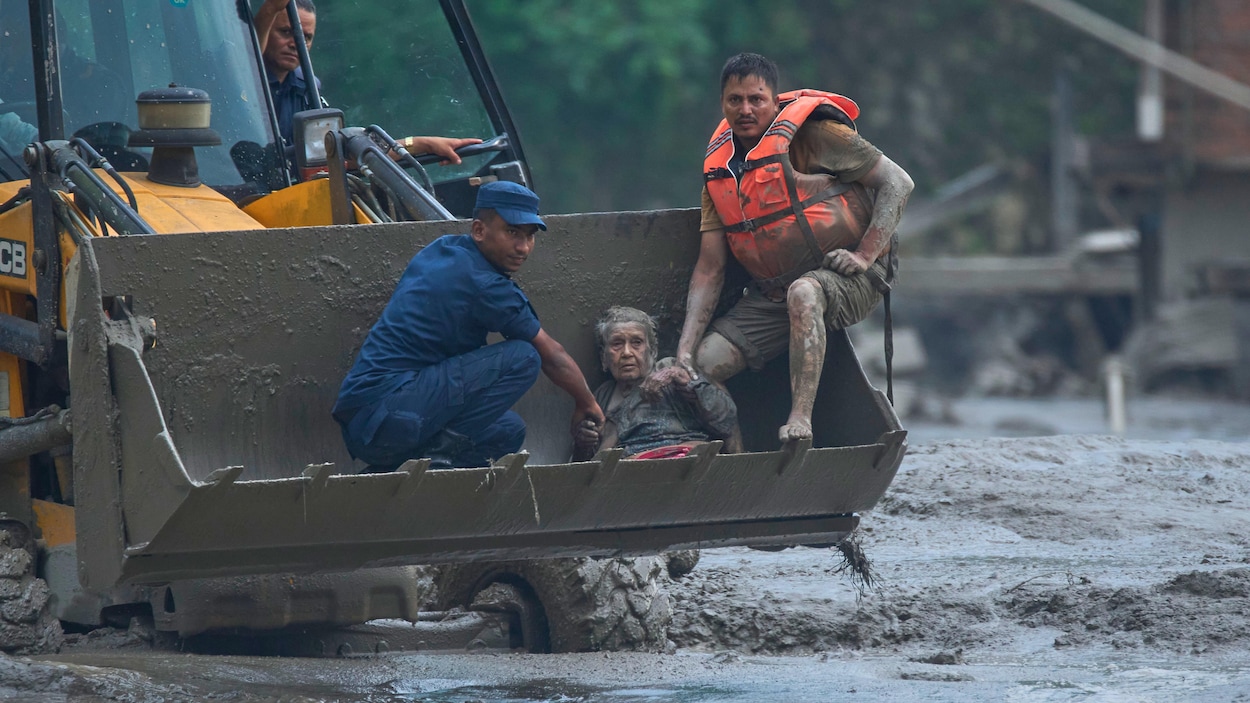
The images circulating on social media, people trapped beneath rubble in La Guaira, surrounded by exhausted neighbors refusing to abandon them, or volunteers searching debris with only the flashlights of their mobile phones, amount to a testimony of the solidarity of the Venezuelan people and an urgent plea for help, one that both Venezuelan authorities and the international community must answer.
They also serve as a painful reminder that public health and disaster preparedness are responsibilities that governments simply cannot outsource.
If you want to know more about ways to help, or need information on missing people, please visit the following link.








 English (US) ·
  French (CA) ·
  French (FR) ·