

 3 days ago
2
3 days ago
2
PROTECT YOURSELF with Orgo-Life® QUANTUM TECHNOLOGY
Orgo-Life the new way to the future Advertising by AdpathwayA patron at a well-known gay bar in Taipei recalls being “extremely shocked and confused” when around 30 police staged a dramatic raid on October 3 and took dozens of people away for questioning.
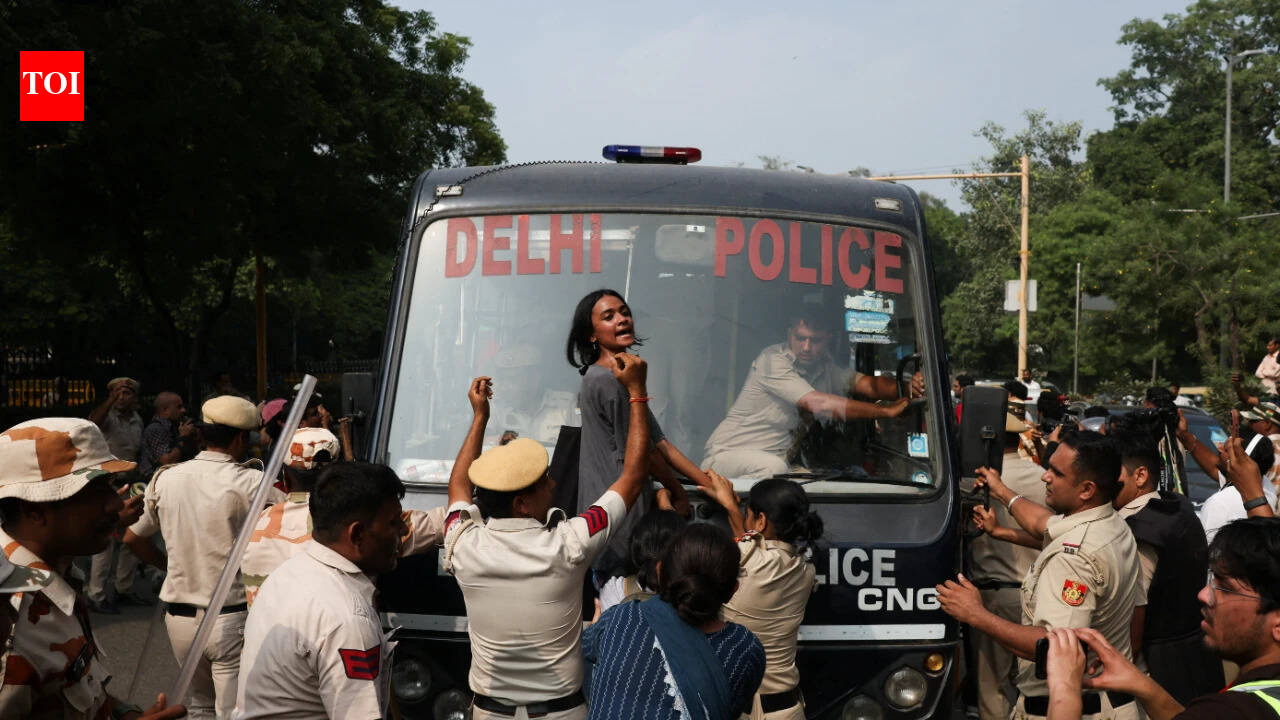
The raid occurred just four weeks before Taipei’s annual Pride celebration. Footage of officers using demeaning language and what attorneys have described as unlawful treatment spurred an estimated 100 protesters to march on precinct headquarters the next day.
While several officers have been disciplined, LGBTQ+ advocates say the issue goes beyond the actions of a few. They are calling for structural changes to protect the rights of sexual minorities in a city that has come to be known for tolerance.
“This incident exposes a serious gap. A city can celebrate LGBTQ+ communities publicly but still not ensure everyone is treated equally by institutions like the police,” Sean Du, secretary-general of the Taiwan Tongzhi Hotline Association, Taiwan’s largest LGBTQ+ advocacy group, said.
Taiwan has built a reputation as one of Asia’s most LGBTQ+-friendly societies in the decades since the police crackdowns and harassment of the martial law era that ended in 1987.
Taiwan became the first in Asia to legalize same-sex marriage in 2019. For queer travelers from countries in the region where same-sex relations are stigmatized or even criminalized, Taipei has become something of a liberal bastion. The island also boasts Asia’s largest Pride parade, held annually on the last Saturday of October, with an estimated 150,000 attending last year.
The Raid
The raid targeted Commander D, a 14-year-old BDSM-themed club in Wanhua District’s Ximending area. Wanhua Precinct police said they had received 13 complaints about Commander D from members of the public between January 1 and Saturday, October 3.
Police visits are not unusual at Taipei clubs; officers typically check IDs before heading on their way. But this time officers came armed with a search warrant approved by the Taipei District Court.
Lin, 34, a clinical psychologist and founder of the independent Threads publication Taipei Rainbow Party Weekly, said he had witnessed numerous nightclub inspections before but that Saturday’s was a “fundamentally different” encounter, one that left some of his friends traumatized.
More than 30 police, including uniformed and plainclothes officers, flooded Commander D at around 4:30 p.m., stopping the music and turning on the lights, Lin said. Videos shared on social media by others showed officers ordering customers to squat down and put away their phones.
Police told the media they had found used condoms and that some customers were nude. Those not wearing clothes were not allowed to put them back on, while those who had hastily gotten dressed were made to remove their clothes to preserve evidence, Lin recounted.
Of the 58 customers police say were inside, around two-thirds were shirtless and most of the rest in their underwear. Only a few were completely naked, Lin said.
Police did not initially display the warrant to those gathered, witnesses said. A video shared on social media shows police repeatedly ordering customers to stop talking, telling them to challenge the operation in court.
Officers also mocked a man for being in a wheelchair, questioning whether he was able to have sex. When a manager came to the man’s defense, he was handcuffed and made to kneel on the floor, local media cited eyewitnesses as saying.
Patrons had their belongings searched and were subjected to a urine test for drugs. After several hours, 51 people were loaded into police vehicles and taken to the precinct for further questioning as “witnesses.”
Commander D did not immediately respond to a request for comment.
Did Police Overstep Their Authority?
Several police actions that day were legally problematic, according to Lingwei Li, founder and managing lawyer at Zenkuan Law Firm and founder of the Taiwan Nonbinary Queer Sluts, Taiwan’s first support group for nonbinary people.
A warrant to search the premises does not automatically entitle police to search every customer’s property, and individual searches require separate criteria or consent, Li said.
Compulsory drug tests, meanwhile, should be limited to persons placed under arrest, not witnesses. Li told The Diplomat they were not aware of any legal basis for barring witnesses from using their phones.
Police also blurred the line between a witness and a suspect, Li said. A witness cannot simply be detained unless they fail to appear without good reason after being formally summoned to testify and a warrant has then been issued.
Addressing the question of nudity, Li said the Social Order Maintenance Act requires more than mere nudity to qualify as an offense, including conduct that offends public decency and continues despite a warning. “This case involves an abuse of police authority,” Li said. “Evidence indicates that the police prohibited the nude individual from putting on clothes, which also contradicts the requirement of ‘failing to heed warnings.’”
“Ordering people who were already dressed to undress is not preserving evidence. It’s humiliation.”
Officers Disciplined
Wanhua Precinct’s investigation found four officers had used inappropriate language. “They have been dealt with strictly,” the precinct told The Diplomat. Each received two reprimands. The official who supervised the operation received a demerit, while the precinct chief himself was issued two reprimands after voluntarily requesting disciplinary action.
“The precinct respects diverse communities and will undertake a thorough review of officers’ on-site enforcement procedures,” the statement said. “It will comprehensively strengthen education and training and require officers, when carrying out their duties in the future, to continue to respect the cultures of a diverse society, in order to safeguard residents’ rights and interests and prevent similar controversies from occurring again.”
No charges have been filed yet in connection with the raid. In a separate statement, police said Commander D’s owner, surnamed Zhong, 44, was referred to the Taipei District Prosecutors’ Office on suspicion of violating public decency, according to a press statement viewed by the Central News Agency.
Commander D had been in the news before. During a September 11 session at the Taipei City Council, Councilor Hung Chien-yi repeated a parent’s claim that minors were entering bars and displayed photos of a venue media identified as Commander D.
The club denied these claims and insisted its staff check IDs before allowing patrons to enter. It’s not clear if those allegations were related to the raid last week.
On October 7, a civil society group filed a criminal complaint with the Taipei District Prosecutors’ Office over alleged police misconduct during the raid, the precinct told the Diplomat. The police said the matter was now subject to investigative confidentiality.
In remarks to the press on October 4, Taipei Mayor Chiang Wan-an said an investigation should follow any suspected misconduct but stopped short of criticizing the Commander D search. After more footage of the operation emerged, Chiang issued an apology and said all Taipei residents are entitled to equal rights. He said he had instructed the police department to improve force discipline to prevent discrimination in the future.
Chiang’s office had not responded to a request for comment by publication time.
Discrimination
Du, the secretary general of Taiwan Tongzhi Hotline Association, believes there was “concrete discrimination” on display on October 3. “And there are sufficient grounds to investigate whether an LGBTQ+ venue was subjected to differential policing,” he told The Diplomat.
The precinct’s acknowledgment is just one step, he said. “We need to look at whether the venue’s gay and BDSM character contributed to it being presumed criminal. Would a comparable non-LGBTQ+ venue face police action with the same frequency and scale? Was it necessary to take dozens of patrons away?”
Du called for an independent investigation, arguing discrimination often goes beyond individual officers’ conduct. “We aren’t claiming every officer had an anti-LGBTQ+ motive. Discrimination also involves assumptions and unequal standards and treatment.”
The Commander D episode recalls a police investigation into Body Fresh, an LGBTQ+ venue in the city of Taichung, that subsequently closed following allegations that it was facilitating commercial sex. Advocates argued authorities had singled out the business while heterosexual-oriented venues avoided similar scrutiny.
“The similarities are frustratingly striking, and traumatizing to many in the community,” said Li, the Zenkuan Law Firm attorney. “In both cases, morality charges were applied to consensual adult conduct in a space serving LGBTQ+ people. Complaints and political pressure, not an identifiable victim, led to enforcement,” they added.
Lin, one of the eyewitnesses, believes the raid has injected energy into the upcoming Pride. “Taipei is, in fact, still friendly and still inclusive. Although society still needs some time to digest what happened in this incident, the social mobilization that followed was faster and more diverse than before,” he said.













 English (US) ·
  French (CA) ·
  French (FR) ·