

 3 months ago
73
3 months ago
73
PROTECT YOURSELF with Orgo-Life® QUANTUM TECHNOLOGY
Orgo-Life the new way to the future Advertising by AdpathwayMexico City · Culture
Key Facts
—The show. An exhibition on sportswashing runs at the Tlatelolco University Cultural Center in Mexico City until August 2.
—The host. It is staged by UNAM, Mexico’s largest public university, and curated by Roberto Barajas.
—The timing. It opened in March, as Mexico co-hosts the 2026 World Cup with the United States and Canada.
—The sweep. Cases run from the 1934 and 1936 fascist games to Argentina in 1978 and Qatar in 2022.
—The local wound. It marks Mexico’s 1968 Olympics, opened ten days after the Tlatelolco student massacre on the same square.
—The target. Curators stress the show criticises the political use of sport, not athletes or the games themselves.
As the World Cup fills Mexico City with flags and fan zones, a quieter show a few kilometres north asks a harder question, and the word it uses for the answer is sportswashing.
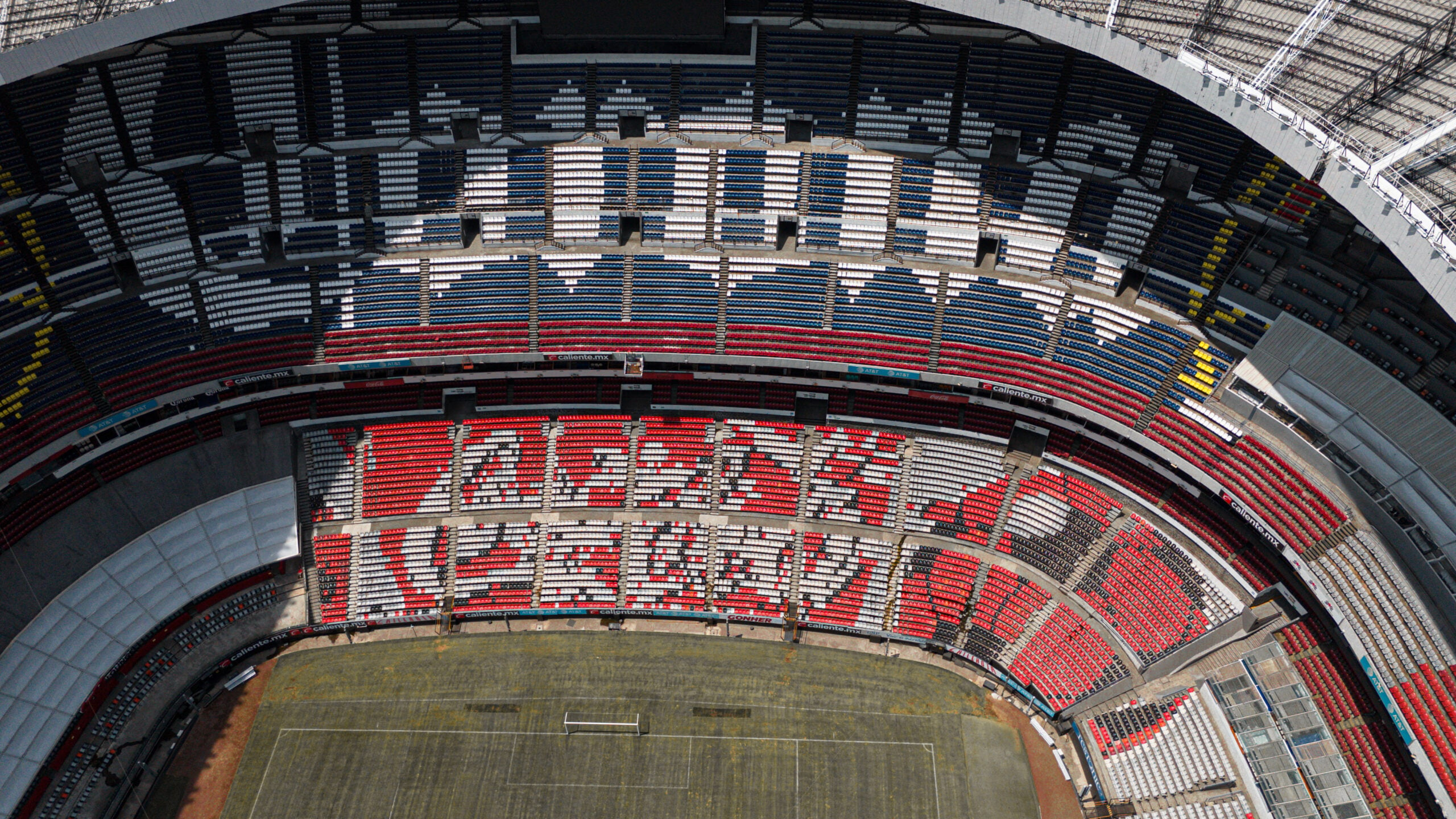
The exhibition sits in the Tlatelolco University Cultural Center, run by UNAM, the country’s largest public university. It opened in March and stays up until the second of August, spanning the whole tournament.
The title is blunt. It reads, in translation, as sporting celebrations as campaigns of political whitewashing.
What sportswashing means
The term describes how a government, company or individual uses sport to clean up a damaged reputation. A tournament becomes a stage on which a host projects order and success to the watching world.
The university’s account of the show traces the pattern back nearly a century. The curator, Roberto Barajas, lays out case after case in which the spectacle masked something the organisers preferred the world not to see.
The tour runs from the 1930 World Cup in Uruguay through Mussolini’s Italy in 1934 and Hitler’s Berlin Olympics in 1936. It moves on to Argentina in 1978, staged under a military junta within blocks of a notorious detention centre, and to Qatar in 2022.
The materials on display include photographs, posters, political cartoons and pre-Columbian pieces. Together they argue that host nations move deliberately from repression to entertainment, using the games as a tool of legitimacy.
The show also gives space to the stories the tournaments buried. One section honours the players of an unofficial women’s World Cup held in Mexico in 1971, a competition that filled the Azteca yet was long ignored by football’s governing body.
A row of stadium seats, painted red, carries some of the sharpest messages. They are reserved, the labels say, for the workers who built stadiums in harsh conditions and for fans who met violence, discrimination or censorship.
Why the venue matters
The location gives the argument its edge. The centre stands on the Plaza of the Three Cultures in Tlatelolco, the square where Mexican forces killed student protesters in October 1968.
Just ten days after that massacre, the same government opened the Mexico City Olympics, the first held in Latin America. The show treats that gap between bloodshed and ceremony as its central example.
One image places police guarding the 1970 World Cup with their backs turned toward the square. Seen through the gallery glass, the officers appear to look away from the site of the killings, a visual pun the curators built on purpose.
A counterpoint to the party
The centre’s director, Jacobo Dayán, frames the theme as both ancient and current. He argues the pattern is as old as the games themselves and as present as the tournament now unfolding across three countries.
The show pointedly extends that lens to the present hosts. It notes that Mexico City, Guadalajara and Monterrey face real strains in security, transport and housing, even as they present a polished face to visiting fans.
The curators are careful about their aim. They say the show does not attack athletes or the contests, only the way bodies such as FIFA can be turned to political ends.
For a foreign visitor swept up in the football, it offers a rare second lens. It is a reminder that the same event can read as celebration and as advertisement, depending on where one stands.
Frequently Asked Questions
What is sportswashing?
It is the use of sport to improve a damaged public image, whether by a government, a company or an individual. Large events such as World Cups and Olympics are the classic vehicles, projecting an image of order while diverting attention from problems at home.
Where and when can I see the exhibition?
It runs at the Tlatelolco University Cultural Center in Mexico City, staged by UNAM, and stays open until the second of August 2026. That covers the full span of the World Cup being co-hosted by Mexico, the United States and Canada.
Does it criticise the athletes?
It does not. The curators say plainly that the show attacks neither athletes nor the competitions, and that its target is the way governments and sporting bodies use the events for political legitimacy.
The Rio Times · Power Map
See who really holds power in Latin America
Click to open the Power Map →









 English (US) ·
  French (CA) ·
  French (FR) ·