

PROTECT YOURSELF with Orgo-Life® QUANTUM TECHNOLOGY
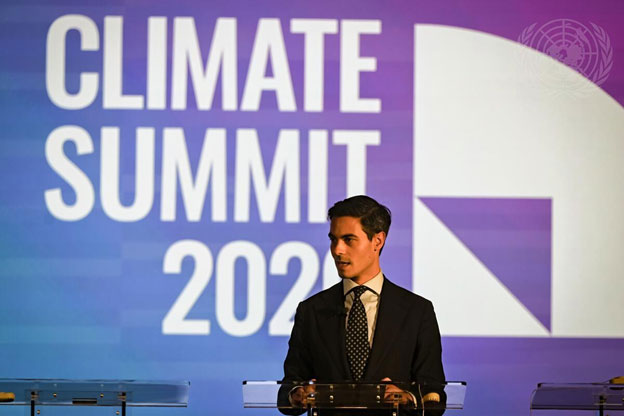
Orgo-Life the new way to the future Advertising by AdpathwayNext week, more than 100,000 people will descend on New York City for more than 1,000 events during Climate Week. By one measure, that extraordinary turnout is a sign of success. By another, it raises an uncomfortable question: after years of summits, pledges and packed conference rooms, why does the climate crisis keep getting worse?
The last 11 years have been the 11 warmest on record. In 2024, the world experienced its first calendar year more than 1.5 degrees Celsius above preindustrial temperatures, and scientists expect the longer-term average to cross that threshold within the next decade. Just last month, a catastrophic glacier collapse and flood in Nepal killed more than 1,300 people and left thousands missing, with scientists concluding that climate change made the conditions behind the disaster more likely. In Europe, at least 35,000 more people died because of excess heat this past summer, driven by our quickly warming climate.
Against that backdrop, it is easy to look at another Climate Week and ask whether all this convening has failed.
But that misses an important counterfactual: where would the world be today without a decade of governments, companies, investors and others pushing climate action forward? When the Paris agreement was adopted in 2015, the world was headed toward roughly 3 to 3.5 degrees Celsius of warming. Today, national policies already in place put the world on a roughly 2.8-degree path. Full implementation of countries’ existing climate pledges would lower that further, to about 2.3 to 2.5 degrees. That is still dangerously far from where we need to be. But it is also meaningful progress from where we were a decade ago.
If we’re going to talk about failure, let’s be clear-eyed about where we’ve fallen short. Climate action has produced tangible results, but it hasn’t moved nearly fast enough. One area that has not received the attention and financing needed is the preservation of nature.
There is no path to achieving climate goals that does not run through nature. Forests, wetlands and mangroves store carbon at scale, buffer storm surge, and stabilize the soils and waters that economies depend on. The world’s oceans alone absorb around 30% of all climate emissions each year. Nature is climate infrastructure. It is also the least-funded part of the system.
Different projects will need different structures, and some investments will always depend on public funding. But wherever credible revenue, savings or other financial value exists, scarce public dollars should help bring much larger pools of private capital to the table.
Climate Week has helped build a global constituency for action. To turn more of that momentum into implementation, we must confront our financial reality and get creative about how we use the money that remains. Scarcity should force us to spend smarter, not think smaller.
The opinions expressed in Fortune.com commentary pieces are solely the views of their authors and do not necessarily reflect the opinions and beliefs of Fortune.














 English (US) ·
  French (CA) ·
  French (FR) ·